How to verify visible site security before a builder's risk renewal
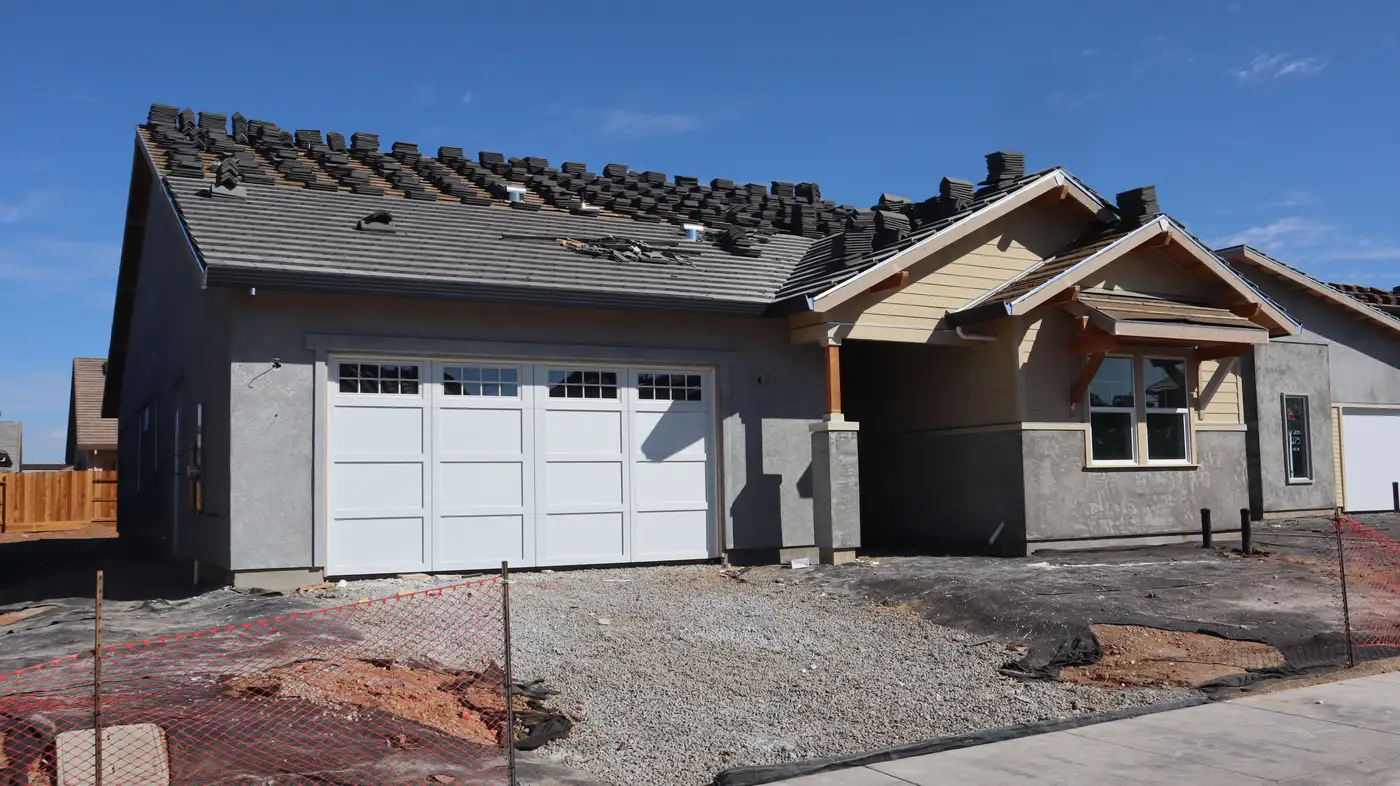
Renewal season on a course-of-construction policy usually comes down to a stack of contractor-submitted photos and a progress narrative from the project team. Those updates get taken by the people with the most reason to make the site look buttoned up, on a day they chose, from an angle they chose. Perimeter fencing that came down three weeks ago for a delivery and never went back up doesn't show up in a photo someone took standing inside the fence line.
Site security is one of the few exposure factors an underwriter can actually verify independent of the insured's own paperwork, if there's a way to look at the site itself rather than someone's description of it.
What "visible site security" covers at renewal
On a builder's risk file, this isn't a vague loss-control box. It's a short list of physical conditions that either hold or don't:
- Perimeter fencing that runs the full boundary, including the sides facing adjacent lots
- Gates that close and appear to stay closed between visits, rather than propped open for equipment access
- Material laydown areas that are enclosed, covered, or at least set back from an open perimeter
- Trailers, generators, and small equipment stored inside the fence line rather than staged on an adjacent lot
- Lighting fixtures in place, even if you can't confirm they're wired and working from an image alone
None of these require a site visit to describe in general terms. What's hard is confirming them on a schedule, for every project in a book, without sending an adjuster or loss-control rep to walk the fence line in person.
Why self-reported progress understates the gap
The mismatch shows up most at the stages where theft of materials exposure is highest: framing lumber delivered ahead of the crew that will use it, rough-in mechanical and electrical staged on site before walls close up, copper and fixtures sitting in a trailer during the weeks between rough-in and finish work. That's also, often, the stage at which site discipline slips. Crews are rotating faster, the super has three jobs running at once, and fencing that was solid at groundbreaking has a gap where a forklift drove through.
A contractor's own update from that period is going to emphasize the framing that went up. The section of chain link that's been down since the concrete pour rarely makes the frame. That gap is exactly why the file needs a second check beyond the contractor's own submission.
A renewal check that doesn't depend on a site visit
A monthly image taken from directly overhead shows the fence line as a continuous or broken shape, shows whether material is staged inside or outside that line, and shows whether the footprint of trailers and laydown areas has grown, shrunk, or moved since last month. None of that requires anyone to walk the site. It also doesn't require trusting that the contractor photographed the part of the perimeter that happened to have a gap in it.
That's the gap Builder's Risk Monitor is built to close: a monthly read of stage of completion, footprint change, and visible site security, built from repeat aerial or satellite imagery and delivered as an overlay you can file directly against the policy. It doesn't replace an adjuster's eyes on a disputed claim, and it won't tell you whether a gate has a working padlock. What it gives you is a consistent, dated record of the fence line and the material storage pattern across every renewal cycle, independent of who took the last photo and when.
If visible site security keeps showing up as a question mark on renewal files rather than a checked box, it may be worth seeing what a monthly overlay looks like before the next cycle comes due.