See the job site between the contractor's reports.
A monthly read of stage of completion, footprint change and visible site security on each insured project, from repeat very-high-resolution imagery, filed against the builder's risk policy.
- GSD
- ≤0.5 m (VHR)
- Cadence
- Monthly
- Platform
- VHR satellite / aerial
- Spectral
- RGB
Prior passFoundation
This passStructure
- Stage detected
- Footprint change
- Site fencing visible
What the file knows about the site
You bind a builder's risk policy, and from then on the file knows what the contractor tells it. A progress update comes in with the contractor's percent complete, and someone enters it. A risk engineer may have walked the site at binding, and may walk it again at a major milestone. In between, the file reads the way the last report left it.
Then a month goes by with nothing, or the update says much the same as the one before, and you cannot tell a quiet winter from a stalled job. Later an extension request lands with a new completion date, and the policy has been sitting on a structure that is further along, or further behind, than anyone wrote down. A loss on an open frame with the enclosure only half done is when you find out which.
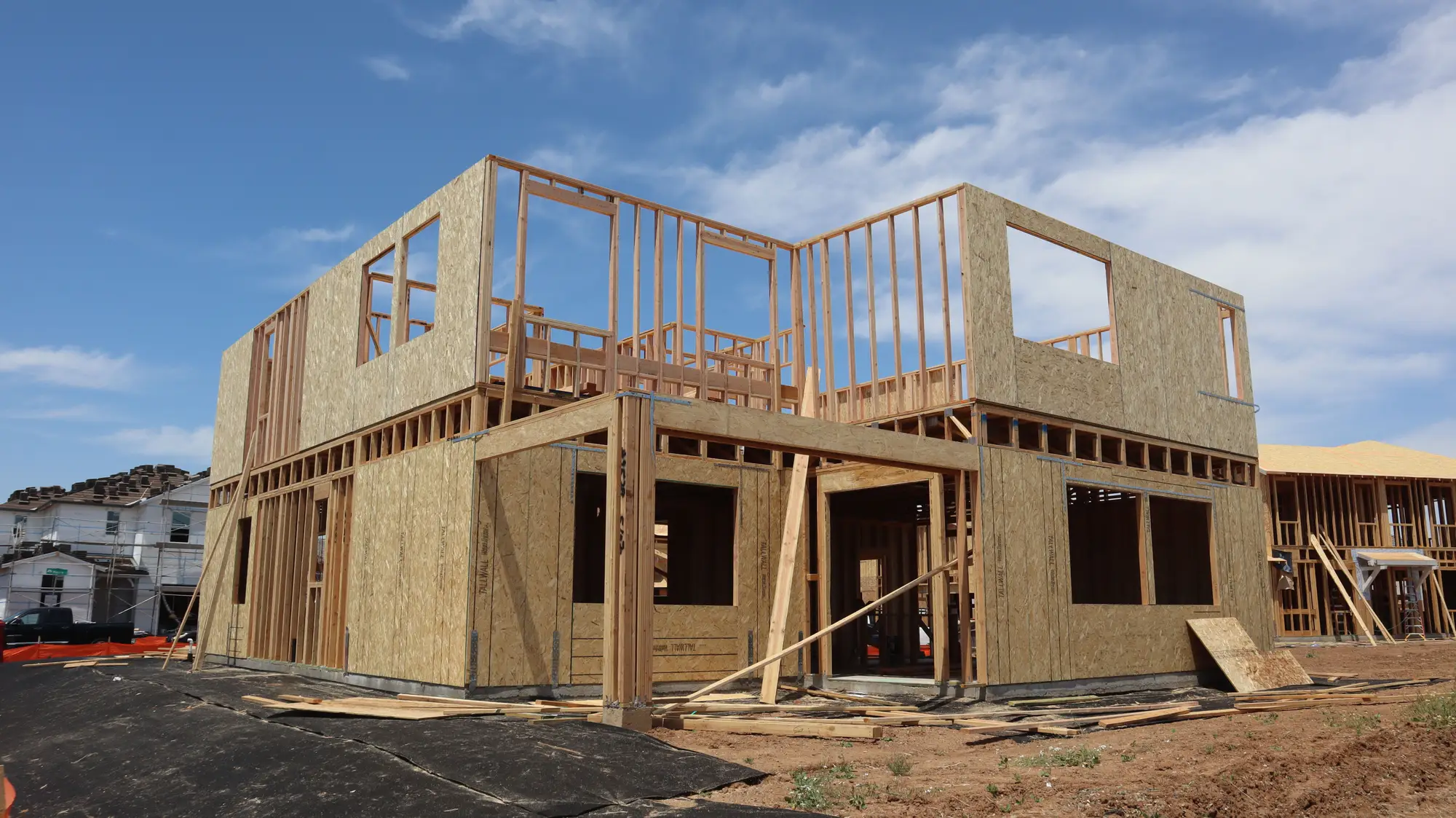
The file has plenty of reports and only one author for them. What it lacks is a second source that does not depend on the person whose schedule is under review. That second source is what this page sells, a pilot at a time.
What comes back each month
2.1Stage of completion read
Site map page
One read per insured project per month, in broad steps: cleared, foundation, structure, near-complete, wherever the stages can be told apart from above. It sits beside the contractor's update in the policy file. Where a stage cannot be told apart, the page says so and does not guess.
2.2Footprint-change flag
Overlay on the site map
The built outline compared with the prior month's pass. It flags a project that has moved and one that has not, so a stalled site and a fast one both stand out before the extension request or the loss.
2.3Site security note
Note on the site map
Whether fencing or an enclosure is visible around the site, where it can be made out. It is a note on what shows from above, and it does not certify the site is secure.
Where it lands
The site map and the note are made to be filed against the policy. Your monthly exposure review can start from the projects the flags point at, instead of from the whole book.
How it works
Step 01: Add the project to the schedule
Send the project location and its site outline, with the policy term. Say whether you want the stage read, the footprint flag, or both.
Step 02: Monthly pass
Each month we use a fresh very-high-resolution image of the site, satellite or aerial.
Step 03: Stage and change assessed
The pass is compared with the last one. We read the stage where it shows and mark any change in the footprint and any visible fencing.
Step 04: Site map and note delivered
You get the site map and the note, ready to file against the policy.
Where it fits
In the monthly exposure review
Open the flags first. A project that advanced faster than its last update, a project that has not moved since the prior pass and a site with no visible enclosure are the ones worth a call to the broker. The rest of the book can wait for its next pass.
Before an extension request is answered
When the request comes in, you have the monthly passes since binding on file. They show whether the structure stood still, and whether the stage on the contractor's last update matches what was on the ground that month. The decision on the extension stays yours.
Choosing where a loss control visit goes
The read helps you order visits. It does not stand in for one. If a site has stalled or jumped, that is a reason to send the risk engineer sooner.
Limits
It is a layer between visits
A monthly read does not replace a loss control visit at binding or at a major milestone. It fills the stretch between visits.
Monthly means monthly
A milestone reached mid-month shows on the next pass. Cadence is a target, and a pass that comes back under cloud is delayed.
Nothing indoors
Optical imagery reads what is visible from above. Interior fit-out, finishes and work under a roof are not assessed.
Resolution sets the detail
At 0.5 m a pixel is about 20 inches across. Buildings, pads and structural stages show. A fence line shows as a line where the ground around it is clear, and its condition, gates and locks do not. Fine detail on the structure is not resolved.
Physical progress only
The read is of what is visible on site. It is silent on cost, contractor billing and the draw schedule, and it carries no percent-complete figure.
Who it's for
For
- Specialty-lines underwriters carrying open builder's risk / course-of-construction policies
- Risk engineers and loss control leads who want a cross-check before they book a visit
- Underwriting teams running monthly exposure reviews across a book of projects
Not for
- Confirming contractor billing or draw-schedule accuracy
- Seeing interior or indoor construction stage
- Replacing a site visit at binding or at a major milestone
- Claims adjustment after a loss
Questions before a pilot
Does this confirm the contractor's billing or draw schedule?
No. It reads visible physical progress. It has no view of cost or billing data.
Can it see inside the building?
No. It sees what is visible from above, so interior fit-out stage is not assessed.
Will a monthly pass catch a fast milestone?
A milestone reached mid-month shows on the next pass, not the day it happens.
Can this replace a site visit?
No. It is a monitoring layer between inspections. A visit at binding and at major milestones stays.
How do we check it against what we already know?
Pick a project whose stage you know from a recent visit, send the site and the dates, and compare our read with your survey.
What do we send, and what comes back?
The project location and outline, and the policy term. You get a site map and a note each month.
Will it open in our underwriting system?
It comes as a page and an overlay you can file against the policy. We do not write into your underwriting system.
Who owns the imagery and the results?
Ownership and licence terms are agreed in writing when the pilot starts. If legal needs them earlier, ask.
How is a pilot bought and priced?
We scope a pilot with you before any price is set. Tell us the size of the book you want to start with.
Put one open project on the schedule.
Send us a project and its policy term. We will tell you what the monthly read can show.
Start a pilot