Field notes: the sub who walked and left the wrap half done
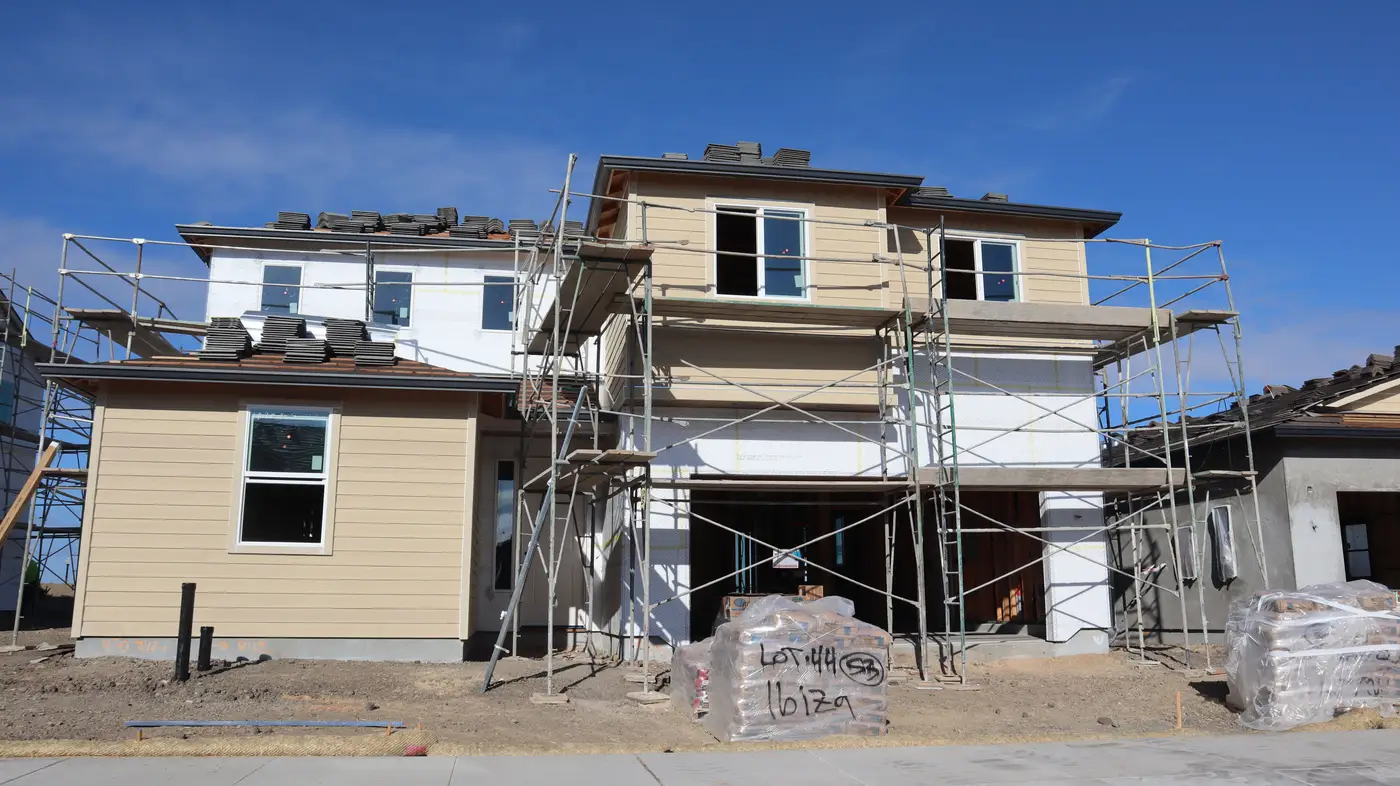
You've seen the photo even if you've never seen this exact job. One elevation is buttoned up, house wrap taped at every seam, fasteners in a tidy grid. The elevation around the corner is studs and sheathing, a roll of wrap still shrink-wrapped on a pallet by the dumpster, flapping where someone started and stopped. Somewhere in between is a stretch where the wrap is hung but not taped, billowing a little every time the wind kicks up off the lot.
That's the frame a sub walks off mid-wrap. Could be a payment dispute, could be they picked up a bigger job across town and didn't bother calling the GC, could be a weather week that turned into three weeks that turned into never. The why matters for the dispute between the GC and the sub. It doesn't change what the exposure looks like sitting on your desk.
Here's the part that should bother an underwriter more than the torn poly: the draw request that came in the same week probably didn't mention any of this. Percent complete on the schedule of values ticks forward because framing is "substantially done" and exterior sheathing is "in progress." Nobody on the draw is lying, exactly. They're reporting against line items, and "weather barrier 60% complete" reads fine on paper. It doesn't tell you that the 40% that's missing is on the side of the building that catches the prevailing wind, or that it's been open for five weeks instead of five days.
That gap, between what's billed and what's actually standing exposed, is where builder's risk claims get interesting. Wind-driven rain finds the open stud bays. OSB wicks moisture and starts to show gray streaking you can see from forty feet before anyone opens a wall. If there's rough mechanical or rough electrical already in, that's copper and conduit sitting behind a flapping sheet of Tyvek instead of a locked, dried-in envelope. A frame half wrapped for ten days is a different risk than a frame half wrapped for ten weeks, and the only way to tell the difference from the file is to have looked at the site more than once.
Most builder's risk programs lean on the contractor's own progress updates, because that's what's available: a draw package, a few phone photos, maybe a site visit if the loss is big enough to justify the drive. None of that is dishonest. It's just reported by the party with the most reason to say things are further along than they are, and it's a snapshot, not a sequence. You don't find out a sub walked off six weeks ago. You find out when a storm rolls through and the adjuster's photos show water staining three stud bays deep.
What catches this kind of thing is the same habit that catches most course-of-construction surprises: looking at the footprint on a schedule, not on a hunch. A monthly read against last month's read. Did the envelope close the way the draw said it would, or does a wall look the same in September as it did in August? Builder's Risk Monitor builds exactly that comparison, a stage-of-completion read pulled from repeat imagery and laid over the site map, so a stalled elevation shows up as a flag on the file instead of a surprise in the loss report.
The half-wrapped frame is one of the quieter ways a job goes sideways between draws, and it rarely shows up as a line item until it's a loss. Worth putting a monthly read on the file before the next storm puts it there for you.